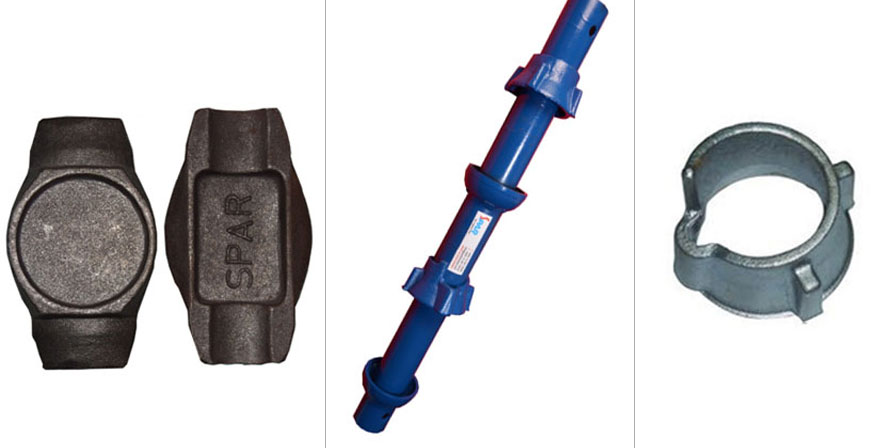
We manufacture and supply Cuplock, Ringlock, scaffold tubes, couplers, platforms, and other scaffolding products for safe and efficient work at height.
ALTRAD SPAR provides scaffolding solutions backed by over 25 years of expertise, with manufacturing facilities in KSA and UAE that enable tailored services and quick support for project needs. As a Scaffolding company in KSA , ALTRAD SPAR serves projects with reliable scaffolding solutions.
With facilities in the KSA and UAE, ALTRAD SPAR offers comprehensive scaffolding manufacturing, hire, sales, and refurbishment services within a certified operational framework, ensuring ongoing support and compliance throughout your project lifecycle.
ALTRAD SPAR offers a complete range of scaffolding solutions from design, manufacture, hire, sales, and refurbishment. All services are performed in accordance with documented QA/QC procedures, and the company complies with ISO, CE, Aramco GI 8.001, SABIC § 9.4, and BS EN 12811.
As a trusted scaffolding company in KSA, we provide a wide range of scaffolding products and services. Talk to Engineers Who Understand Your Project. Get Fast and Ecellent Support.
Explore the broadest range of access and scaffolding products available, work with an expert on a custom solution, and learn about our extended services as well.
A scaffold or staging is an elevated and a temporary structure i.e. platform built to support the original structure as well as workmen, and materials to aid in the construction, maintenance, and repair of buildings, bridges, and all other man-made structures.
A Scaffold is used in construction work for the safety of workers and the materials used under the process when work cannot be done at ground level or on a finished floor.
Types of scaffold vary with the type of construction work. A scaffold is made up of timber or steel. It should be stable and strong to support workmen and other construction material placed on it.
Scaffolding is the individual components or specific materials, or equipment used in building a temporary structure/platform i.e. scaffold. For example, Pipes & Tubes, Cuplock Systems, Ringlock Systems, Tube and Fittings, Scaffolding Steel Boards/Plank, Ladder & Lattice Beams, couplers or frames, scaffold metal deck, etc.
Scaffolding work is the services provided by the scaffolding company for erecting, altering, or dismantling a temporary platform/ scaffolds built to support construction work at the site.
There are many types of scaffold but main as the followings:
Supported scaffolds: These scaffolds consist of one or more platforms supported by rigid, load-bearing members,
such as poles, legs, frames, outriggers, etc.
Suspended scaffolds: These scaffolds are one or more platforms suspended by ropes or other non-rigid, overhead support.
Mobile scaffolds: These scaffolds, such as aerial lifts, personnel hoists, etc. which are sometimes thought of as vehicles or machinery, are regarded as mobile scaffolds.
A supported scaffold is the most commonly used form of scaffold i.e. temporary platform. It is the type of scaffold that can be seen mostly at construction sites and on most other forms of work where elevation is required.
No, one type of controlled scaffolds cannot intermix and fit with another type in the same way and for the same purpose. They may have different resistance, thicknesses, and the rigidity between the components can also vary.
There are different types of Scaffolds used in construction work depending on the nature of the project, for example:
A single scaffold is mostly used in brick masonry work and is also called a brick layer’s scaffold. It consists of standards, ledgers, putlogs, etc. that are parallel to the wall at a distance of about 1.2 m. The gap between the standards is about 2 to 2.5 m. Ledgers connect the standards at a vertical interval of 1.2 to 1.5 m. Putlogs are taken out from the hole of the wall to one end of the ledgers. Putlogs are placed at an interval of 1.2 to 1.5 m.
Double Scaffold is mostly used for stone masonry so, it is also called mason’s scaffold. In stone walls, it is hard to make holes in the wall to support putlogs. So, two rows of the scaffold are constructed to make it strong. The first row is 20 – 30 cm away from the wall and the other one is 1m away from the first row. Then putlogs are placed which are supported by both frames. To make it more strong rakers and cross braces are provided. This is also called an independent scaffold.